
Shampoo vs Conditioner: What’s the Difference and Which One Does Your Hair Need?
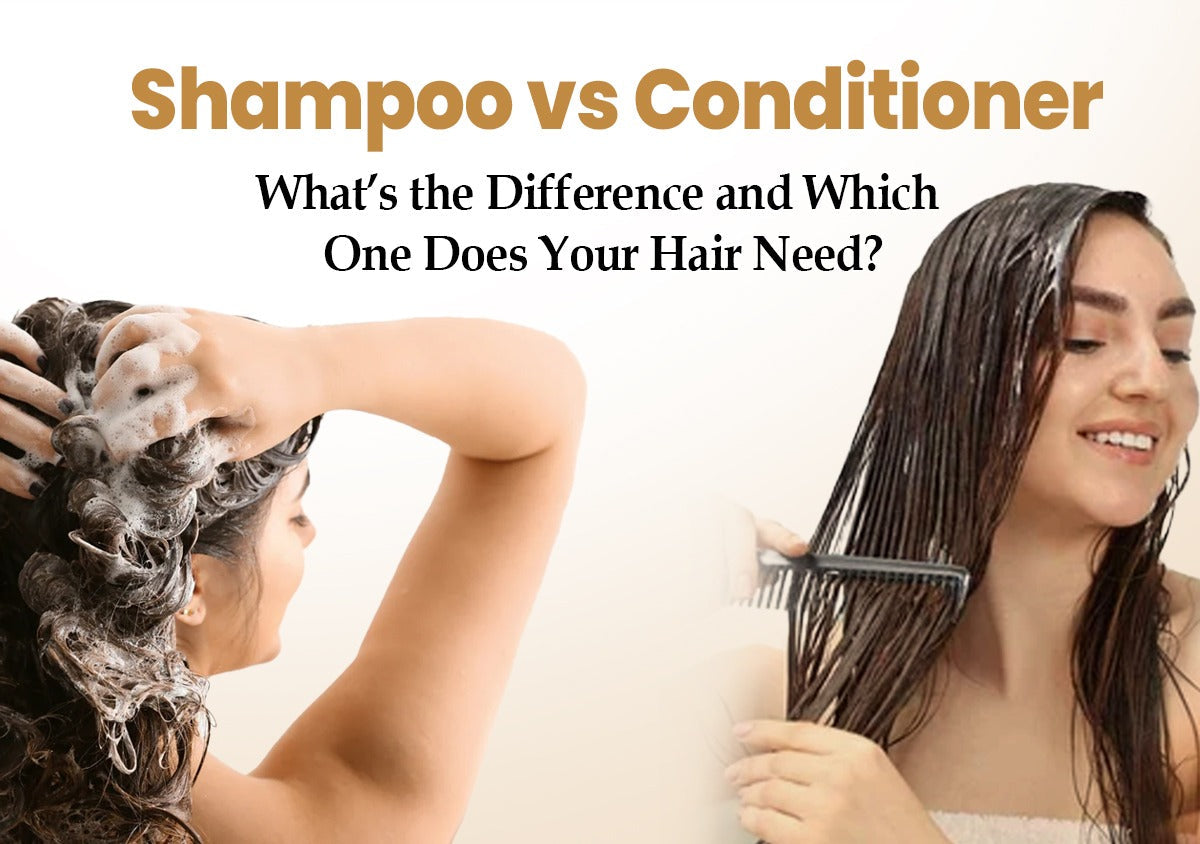
Shampoo vs Conditioner is a common question when building a proper hair care routine. While both products are important, they perform completely different functions. Shampoo primarily helps cleanse the scalp and hair by removing dirt, excess oil, sweat, and product buildup, whereas conditioner focuses on moisturizing, smoothing, detangling, and improving the manageability of the hair.
Using the right combination can help your hair feel cleaner, softer, smoother, and easier to manage. At Vedaxry, hair care is inspired by Ayurvedic principles and natural ingredients, with products designed to support a balanced and nourishing hair care routine.
Shampoo vs Conditioner: What Is the Main Difference?
The easiest way to understand the difference is to think of shampoo as a cleanser and conditioner as a moisturizer and softener for the hair.
What Does Shampoo Do?
Shampoo or hair cleanser is mainly designed to clean your scalp and hair.
It helps remove:
- Dirt and dust
- Excess scalp oil
- Sweat
- Environmental impurities
- Styling product residue
- Everyday buildup
A good cleansing routine helps keep the scalp fresh and prepares the hair for subsequent care.
However, excessive cleansing or using a product that is not suitable for your hair type may leave the hair feeling dry or rough. This is why choosing a cleanser according to your scalp and hair needs is important.
What Does Conditioner Do?
Conditioner is designed to provide moisture, softness, smoothness, and manageability after cleansing.
It can help:
- Make hair softer
- Reduce tangling
- Improve manageability
- Control frizz
- Add smoothness and shine
- Reduce the feeling of dryness
- Make combing easier
Vedaxry Hair Conditioner is formulated with ingredients such as coconut milk, fenugreek, hibiscus, Bhringraj, Brahmi, curry leaves, reetha, licorice, and rosemary oil. The product is positioned for nourishment, moisturization, softness, and easier detangling.
Shampoo vs Conditioner: A Simple Comparison
|
Feature |
Shampoo / Hair Cleanser |
Conditioner |
|
Main purpose |
Cleanses hair and scalp |
Conditions and moisturizes hair |
|
Primary focus |
Scalp and hair cleansing |
Hair lengths and ends |
|
Removes buildup |
Yes |
No |
|
Adds moisture |
Limited |
Yes |
|
Helps detangle |
Limited |
Yes |
|
Helps control frizz |
Depends on formula |
Yes |
|
Makes hair softer |
Not the primary purpose |
Yes |
|
Typical use |
During hair washing |
After shampooing |
The two products therefore work together rather than replacing each other.
Do You Need Both Shampoo and Conditioner?
For many people, using both can make a hair care routine more balanced.
Shampoo cleans the scalp, while conditioner helps care for the lengths and ends after cleansing. This is especially useful if your hair feels dry, tangled, rough, frizzy, or difficult to comb.
Vedaxry hair care range includes hair cleansers for different needs, including normal hair, oily scalp, and dandruff concerns, along with its Ayurvedic Hair Conditioner.
Which One Does Your Hair Need?
The answer depends on your scalp condition, hair texture, dryness, and overall hair concerns.
1. If You Have an Oily Scalp
If your scalp becomes greasy quickly, cleansing is an important part of your routine.
Choose a suitable hair cleanser and focus the cleansing process primarily on the scalp. Avoid unnecessarily applying heavy conditioning products directly to the roots if they make your hair feel weighed down.
2. If You Have Dry or Rough Hair
Conditioning becomes particularly important when your hair feels dry, rough, or difficult to manage.
A nourishing conditioner can help improve softness and manageability after washing.
3. If You Have Frizzy Hair
Frizz can make hair look rough and difficult to style. Conditioning after cleansing can help make the hair feel smoother and easier to comb and style.
4. If Your Hair Is Damaged or Chemically Treated
Colored, chemically treated, or frequently heat-styled hair may benefit from a consistent conditioning routine.
Vedaxry states that its Hair Conditioner is suitable for dry, damaged, colored, and chemically treated hair.
5. If You Have Normal Hair
If your hair is relatively balanced, you can use a gentle cleanser followed by a suitable conditioner to maintain softness and manageability.
How to Use Shampoo and Conditioner Correctly
Following the correct order is simple:
Step 1: Wet Your Hair
Thoroughly wet your scalp and hair with water.
Step 2: Cleanse Your Scalp
Apply an appropriate amount of shampoo or hair cleanser and gently massage the scalp with your fingertips.
Avoid aggressive rubbing, especially if your scalp is sensitive.
Step 3: Rinse Thoroughly
Make sure the cleanser is properly rinsed from the scalp and hair.
Step 4: Apply Conditioner
After cleansing, apply conditioner primarily to the mid-lengths and ends of your hair.
Vedaxry recommends applying its Hair Conditioner from the mid-lengths toward the ends, leaving it for a few minutes, and then rinsing thoroughly.
Step 5: Rinse
Rinse the conditioner thoroughly and gently squeeze excess water from your hair.
Step 6: Dry Gently
Avoid aggressively rubbing wet hair with a towel. Instead, gently pat or squeeze out excess water.
Why Conditioner Should Usually Be Applied to Hair Lengths
Your scalp naturally produces sebum, while the ends of the hair are farther away from the scalp and can often feel drier.
Applying conditioner mainly to the mid-lengths and ends can therefore provide targeted conditioning without unnecessarily weighing down the roots.
This is also the application approach recommended for Vedaxry Hair Conditioner.
Can You Use Conditioner Without Shampoo?
Yes, depending on your hair type and routine, conditioner can sometimes be used independently.
However, conditioner is not a replacement for shampoo or hair cleanser when your scalp needs proper cleansing.
If your scalp has accumulated oil, sweat, dirt, or styling products, cleansing is still important.
Can You Skip Conditioner?
You can, but whether you should depends on your hair.
If your hair is naturally very fine or oily and feels weighed down easily, you may prefer a lightweight conditioning approach.
However, if your hair is dry, frizzy, tangled, damaged, or difficult to manage, skipping conditioner may leave it feeling rougher and harder to comb.
A balanced routine generally involves cleansing the scalp and conditioning the lengths.
Vedaxry Hair Conditioner for Nourished and Manageable Hair
Vedaxry Hair Conditioner combines coconut milk, fenugreek, hibiscus, Bhringraj, Brahmi, curry leaves, reetha, licorice, rosemary oil, and other botanical ingredients. According to the product information, it is designed to nourish, moisturize, strengthen, soften, and improve hair manageability.
The formula is also described by Vedaxry as sulfate-free, paraben-free, silicone-free, fragrance-free, vegan, and plant-based, with 99% plant-derived ingredients.
For a complete routine, Vedaxry also offers hair cleansers and hair serum alongside its conditioner.
Shampoo vs Conditioner: Which One Is More Important?
Rather than asking which one is better, it is more useful to understand what your hair needs.
Shampoo is important for cleansing.
Conditioner is important for conditioning.
They perform different jobs, so comparing them as competing products isn't quite accurate.
A simple routine could be:
Cleanse → Condition → Rinse → Dry → Style
If your hair is particularly dry or difficult to manage, you may also consider additional hair care such as a suitable hair serum or oil as part of your routine.
Common Hair Care Mistakes to Avoid
1. Applying Too Much Shampoo
More shampoo doesn't necessarily mean cleaner hair. Use an appropriate amount based on your hair length and cleansing needs.
2. Applying Conditioner Directly to the Scalp
For many hair types, applying conditioner mainly to the lengths and ends is a better approach.
3. Skipping Conditioner When Hair Is Dry
If your hair is consistently dry or tangled, conditioner can be an important part of your routine.
4. Washing Hair With Extremely Hot Water
Very hot water can leave hair and scalp feeling dry. Lukewarm or comfortable-temperature water is generally preferable.
5. Roughly Rubbing Wet Hair
Wet hair can be more vulnerable to mechanical damage. Handle it gently when drying and detangling.
Final Thoughts
Understanding Shampoo vs Conditioner makes it easier to build a hair care routine that actually suits your needs. Shampoo primarily cleanses the scalp and hair, while conditioner focuses on softness, moisture, smoothness, and manageability.
For a balanced routine, choose a cleanser according to your scalp needs and follow it with a suitable conditioner for your hair lengths. Vedaxry combines Ayurvedic-inspired hair care with botanical ingredients to create products designed for everyday hair care.
The key is not simply using more products—it's using the right product, in the right way, for your hair type.
Frequently Asked Questions
1. What is the difference between shampoo and conditioner?
Shampoo primarily cleanses the scalp and hair by removing dirt, oil, sweat, and buildup. Conditioner is used after cleansing to moisturize, soften, smooth, and improve hair manageability.
2. Is conditioner necessary after shampoo?
Conditioner can be particularly useful if your hair is dry, frizzy, tangled, damaged, or difficult to manage. It helps improve softness and manageability after cleansing.
3. Can I use shampoo and conditioner every day?
The ideal frequency depends on your scalp, hair type, lifestyle, and the products you use. Oily scalps may require more frequent cleansing, while dry hair may benefit from less frequent washing.
4. Should conditioner be applied to the scalp?
Generally, conditioner is best concentrated on the mid-lengths and ends unless the specific product instructions say otherwise. Vedaxry recommends applying its Hair Conditioner from the mid-lengths to the ends.
5. Which comes first, shampoo or conditioner?
Shampoo comes first. Cleanse the scalp and hair, rinse thoroughly, and then apply conditioner to the lengths and ends.
6. Can conditioner reduce frizz?
Conditioning can help hair feel smoother and more manageable, which may help reduce the appearance of frizz.
7. Is Vedaxry Hair Conditioner suitable for dry hair?
According to Vedaxry's product information, its Hair Conditioner is suitable for dry, damaged, colored, chemically treated, and other hair types.
8. How long should I leave conditioner in my hair?
Follow the instructions of the specific conditioner. Vedaxry recommends leaving its Hair Conditioner on for a few minutes before rinsing.
9. Can conditioner help with tangled hair?
Yes. Conditioner can make hair smoother and easier to detangle. Vedaxry specifically describes its conditioner as helping detangle knots and improve manageability.
10. What should I use for a complete Ayurvedic hair care routine?
A basic routine can include a suitable hair cleanser, conditioner, and, when appropriate for your hair needs, a hair serum or hair oil. Vedaxry offers these categories as part of its hair-care range.


Comments