
Natural Hair Cleanser vs Shampoo: Which Is Better for Your Hair?
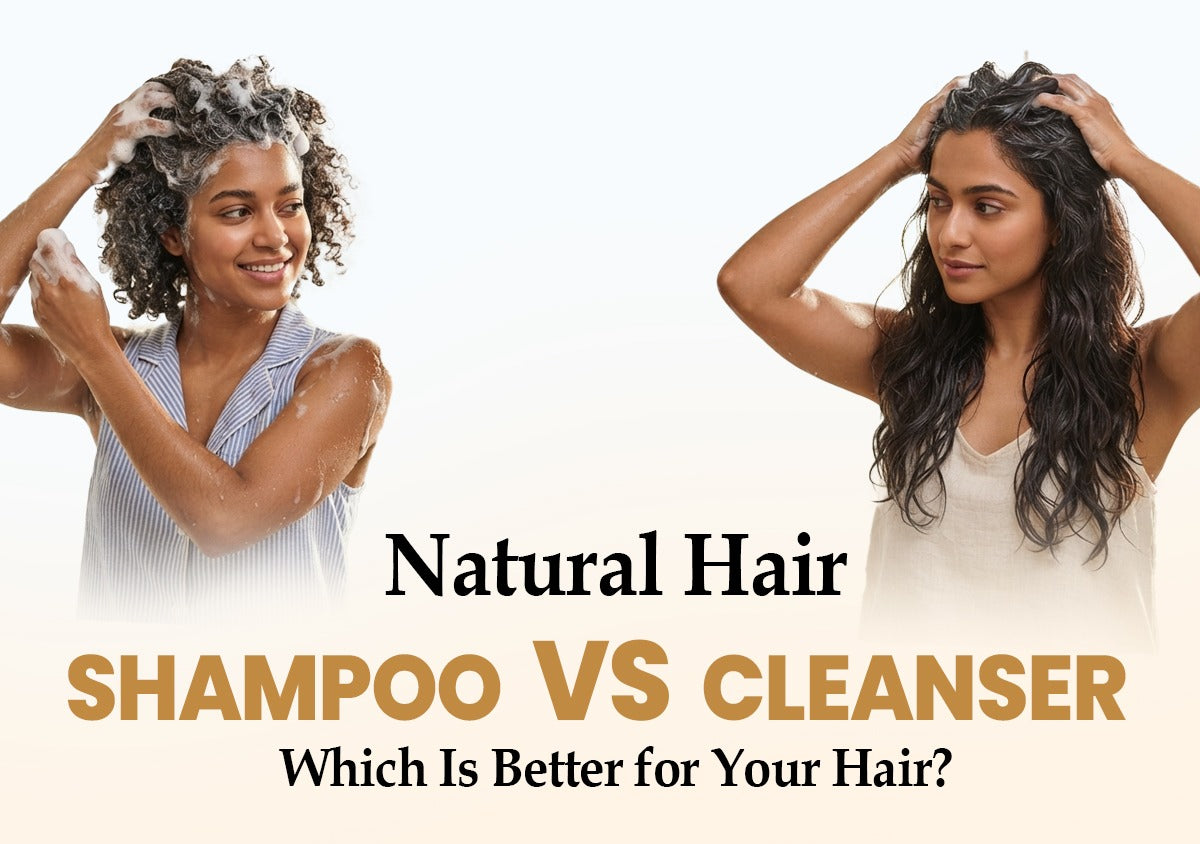
Choosing the right product for your hair can make a big difference to your scalp and overall hair-care routine. A natural hair cleanser can be a gentle option for removing excess oil, dirt, sweat, and buildup while helping maintain the scalp’s natural balance. But how does it compare with a conventional shampoo, and which one is better for your hair? Let’s understand the key differences and how to choose the right cleansing option for your scalp.
What Is a Natural Hair Cleanser?
A natural hair cleanser is designed to clean the scalp and hair using plant-derived or naturally inspired cleansing ingredients. Instead of focusing only on strong cleansing, many natural formulas aim to remove impurities while maintaining the hair’s natural oils.
For people with oily, sensitive, or easily irritated scalps, choosing a gentle cleansing routine can be particularly useful. Dermatologists also recommend selecting hair-care products according to your hair and scalp type rather than following a single routine for everyone.
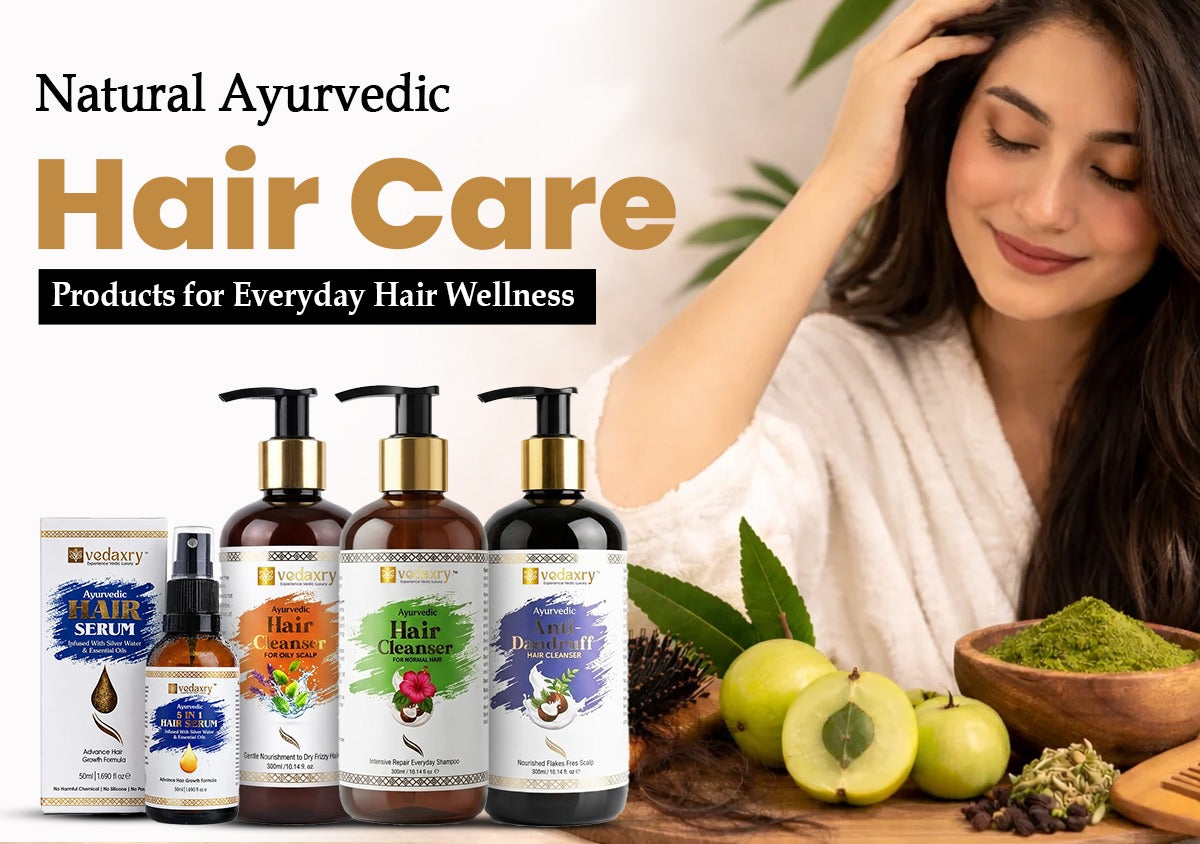
Vedaxry approach combines Ayurvedic ingredients with modern hair-care requirements. Its Oily Scalp Hair Cleanser contains ingredients such as Narikela, Brahmi, Aloe Vera, Reetha, Nagarmotha, Turmeric, Clove, Lavender, and Peppermint.
What Is Shampoo?
Shampoo is primarily formulated to cleanse the scalp and hair by removing sebum, sweat, dirt, dead skin cells, environmental pollutants, and styling-product residue. The cleansing agents in shampoo help lift oil and impurities so they can be rinsed away.
However, not every shampoo is formulated in the same way. Some shampoos are designed for oily scalps, while others focus on dryness, dandruff, damaged hair, colour-treated hair, or sensitive scalps.
The important factor is not simply whether a product is called a “shampoo” or “cleanser,” but whether its formulation suits your scalp and hair needs.
Natural Hair Cleanser vs Shampoo: Key Differences
| Feature | Natural Hair Cleanser | Shampoo |
|---|---|---|
| Main purpose | Gentle scalp and hair cleansing | Cleansing scalp and hair |
| Ingredients | Often plant-derived or herbal ingredients | Cleansing agents plus conditioning/functional ingredients |
| Focus | Gentle cleansing and scalp care | Cleansing and specific hair concerns |
| Best for | People looking for a gentler, nature-inspired routine | People seeking targeted cleansing |
| Frequency | Depends on formulation and scalp type | Depends on formulation and scalp type |
| Suitable for oily scalp | Some formulas are specifically designed for oily scalp | Many shampoos are available for oily scalp |
There is no universal winner. The better option depends on your scalp condition, hair texture, washing frequency, lifestyle, and the formulation you choose.
Benefits of Using a Natural Hair Cleanser
1. Gentle Cleansing
A well-formulated natural hair cleanser can help remove dirt, sweat, excess oil, and buildup without making the hair feel excessively dry.
Vedaxry states that its Oily Scalp Hair Cleanser is designed to remove excess oil and impurities while providing gentle cleansing.
2. Helps Manage Excess Oil
An oily scalp can make hair appear greasy shortly after washing. A cleanser formulated specifically for oily scalp care can help remove excess sebum and keep the scalp feeling fresh.
Vedaxry Oily Scalp Hair Cleanser is specifically positioned for oily scalp concerns and is intended to help manage excess oil and greasiness.
3. Plant-Based Ayurvedic Ingredients
Vedaxry formulation includes traditional ingredients such as Reetha, Brahmi, Aloe Vera, Narikela, Nagarmotha, Turmeric, Clove, Lavender, and Peppermint. Reetha is traditionally used as a natural cleansing ingredient, while Aloe Vera is included for its soothing and moisturising properties.
4. Supports a Balanced Hair-Care Routine
Over-cleansing can leave some hair types feeling dry, while insufficient cleansing can allow oil and product buildup to accumulate. Finding the right balance is important for maintaining comfortable scalp and healthy-looking hair.
The American Academy of Dermatology recommends washing according to how oily or dirty your hair becomes and choosing products according to your hair type.
Is Natural Hair Cleanser Better Than Shampoo?
Not necessarily for everyone.
A natural hair cleanser may be a good choice if you prefer plant-based or Ayurvedic hair-care products and want a gentle cleansing experience. On the other hand, a shampoo may be more appropriate when you need a formulation specifically designed for a particular scalp or hair concern.
For example, people experiencing persistent dandruff may need a clinically appropriate anti-dandruff shampoo rather than relying only on a cosmetic cleanser. Persistent itching, redness, burning, severe flaking, or hair loss should be evaluated by a qualified healthcare professional.
The best approach is to choose a product based on your scalp rather than simply choosing a product because it is labelled “natural” or “shampoo.”
Natural Hair Cleanser for Oily Scalp
If your scalp becomes greasy quickly, choosing a cleanser designed for oily scalp care can be useful.
Vedaxry Oily Scalp Hair Cleanser
Vedaxry Oily Scalp Hair Cleanser is formulated with Ayurvedic and plant-based ingredients including:
- Narikela
- Brahmi
- Aloe Vera
- Reetha
- Nagarmotha
- White Curcumin
- Turmeric
- Clove
- Lavender
- Peppermint
According to Vedaxry’s product information, the cleanser is designed to remove excess oil and impurities while providing gentle cleansing. The product is also listed as sulphate-free, paraben-free, silicone-free, vegan and plant-based, and 99% plant-derived.
Recommended product:
Vedaxry Ayurvedic Hair Cleanser for Oily Scalp
How to Use a Natural Hair Cleanser
Using a hair cleanser correctly can make your washing routine more effective.
Step 1: Wet Your Hair
Thoroughly wet your scalp and hair with water.
Step 2: Apply the Cleanser
Take a small amount of cleanser in your palm and apply it primarily to the scalp.
Step 3: Massage Gently
Use your fingertips to massage the cleanser into the scalp with gentle circular movements. Avoid aggressive scratching, especially if your scalp is sensitive.
Step 4: Rinse Thoroughly
Rinse your hair properly with water so that cleanser and loosened buildup are removed.
Step 5: Condition If Needed
If your hair lengths feel dry or tangled, follow with a suitable conditioner, particularly on the mid-lengths and ends.
Vedaxry provides similar application instructions for its Oily Scalp Hair Cleanser, including wetting the hair, applying a small amount, gently massaging the scalp, and rinsing thoroughly.
How Often Should You Clean Your Hair?
There is no single ideal washing schedule for everyone.
Your washing frequency can depend on:
- Scalp oiliness
- Hair texture
- Sweat and physical activity
- Styling-product use
- Environmental pollution
- Dandruff or scalp concerns
- Hair dryness and sensitivity
People with oily scalps may need more frequent cleansing, while people with dry or sensitive scalps may need less frequent washing. The American Academy of Dermatology recommends adjusting your washing routine according to how often your hair becomes oily or dirty.
Common Mistakes to Avoid
Using Too Much Product
More cleanser does not necessarily mean cleaner hair. Start with a small amount and adjust according to your hair length and scalp needs.
Scrubbing the Scalp Too Hard
Aggressive scratching can irritate the scalp. Massage gently using your fingertips.
Ignoring the Scalp
Hair care should begin with the scalp. Excess oil, sweat, and product buildup primarily accumulate around the scalp.
Choosing Products Only Because They Are “Natural”
Natural does not automatically mean suitable for every person. Ingredients can affect individuals differently, so choose products according to your scalp and hair type.
Washing With Very Hot Water
Very hot water can make hair and scalp feel dry. Use comfortable, lukewarm water when washing.
Natural Hair Cleanser or Shampoo: Which Should You Choose?
Consider a natural hair cleanser if:
- You prefer Ayurvedic or plant-based hair care.
- You want a gentle cleansing routine.
- Your scalp tends to become oily.
- You prefer formulations featuring botanical ingredients.
- You want to minimise certain synthetic ingredients in your routine.
Consider a targeted shampoo if:
- You have a specific scalp condition requiring specialised care.
- You need stronger cleansing for significant buildup.
- Your hair type requires a specialised formulation.
- A healthcare professional has recommended a medicated shampoo.
Ultimately, the best hair cleanser or shampoo is the one that effectively cleans your scalp while remaining suitable for your hair type and routine.
Why Choose Vedaxry for Natural Hair Care?
Vedaxry combines Ayurvedic-inspired ingredients with modern personal-care formulations. Its Oily Scalp Hair Cleanser features a blend of botanical ingredients and is positioned as a gentle cleansing option for oily scalp concerns.
For people looking to make their hair-care routine more nature-focused, a suitable natural hair cleanser can be a practical addition to regular scalp care.
Conclusion
So, natural hair cleanser vs shampoo—which is better? The answer depends on your individual scalp and hair needs. A shampoo can provide effective cleansing and targeted care, while a well-formulated natural hair cleanser can offer a gentle, plant-based approach to everyday cleansing.
If you have an oily scalp and prefer Ayurvedic-inspired hair care, Vedaxry Oily Scalp Hair Cleanser is one option to consider. Its formulation combines ingredients such as Reetha, Brahmi, Aloe Vera, Narikela, Nagarmotha, Turmeric, Clove, Lavender, and Peppermint for a gentle scalp-cleansing routine.
Frequently Asked Questions
1. What is a natural hair cleanser?
A natural hair cleanser is a hair-care product designed to clean the scalp and hair using naturally derived or plant-based cleansing ingredients. It can help remove dirt, sweat, excess oil, and buildup while supporting a gentle hair-care routine.
2. Is a natural hair cleanser better than shampoo?
Neither is universally better. The right choice depends on your scalp type, hair texture, washing frequency, and specific hair concerns.
3. Can I use a natural hair cleanser for an oily scalp?
Yes. Some natural hair cleansers are specifically formulated for oily scalp care. Vedaxry Oily Scalp Hair Cleanser is designed to help remove excess oil and impurities from an oily scalp.
4. How often should I use a natural hair cleanser?
It depends on your scalp and hair type. Oily scalps may require more frequent cleansing, while dry or sensitive scalps may require less frequent washing.
5. Does a natural hair cleanser help with hair growth?
A cleanser primarily supports scalp and hair hygiene. It should not be considered a standalone treatment for hair loss or hair-growth disorders. Persistent or significant hair loss should be assessed by a qualified healthcare professional.
6. Is Vedaxry Hair Cleanser suitable for oily scalp?
Vedaxry's Oily Scalp Hair Cleanser is specifically formulated for oily scalp concerns and is intended to remove excess oil and buildup while providing gentle cleansing.
7. What ingredients are in Vedaxry Oily Scalp Hair Cleanser?
The product page lists Narikela, Brahmi, Aloe Vera, Reetha, Nagarmotha, White Curcumin, Turmeric, Clove, Lavender, and Peppermint among its key ingredients.
8. Can I use Vedaxry Hair Cleanser daily?
Vedaxry states that its Oily Scalp Hair Cleanser is gentle enough for daily use or as often as needed. However, your ideal washing frequency should still depend on your scalp and hair needs.
9. Can I use conditioner after a natural hair cleanser?
Yes. If your hair lengths need additional moisture or detangling, you can use a suitable conditioner after cleansing. Vedaxry also recommends following its Oily Scalp Hair Cleanser with its Hair Conditioner if desired.
10. Where can I buy Vedaxry Oily Scalp Hair Cleanser?
You can explore the product on the official Vedaxry website:
Vedaxry Oily Scalp Hair Cleanser
Comments